





Splay: a wider view
of your next idea
From the first sketch of a token to the transaction receipt, a workspace that keeps the next decision in view.
Read the article
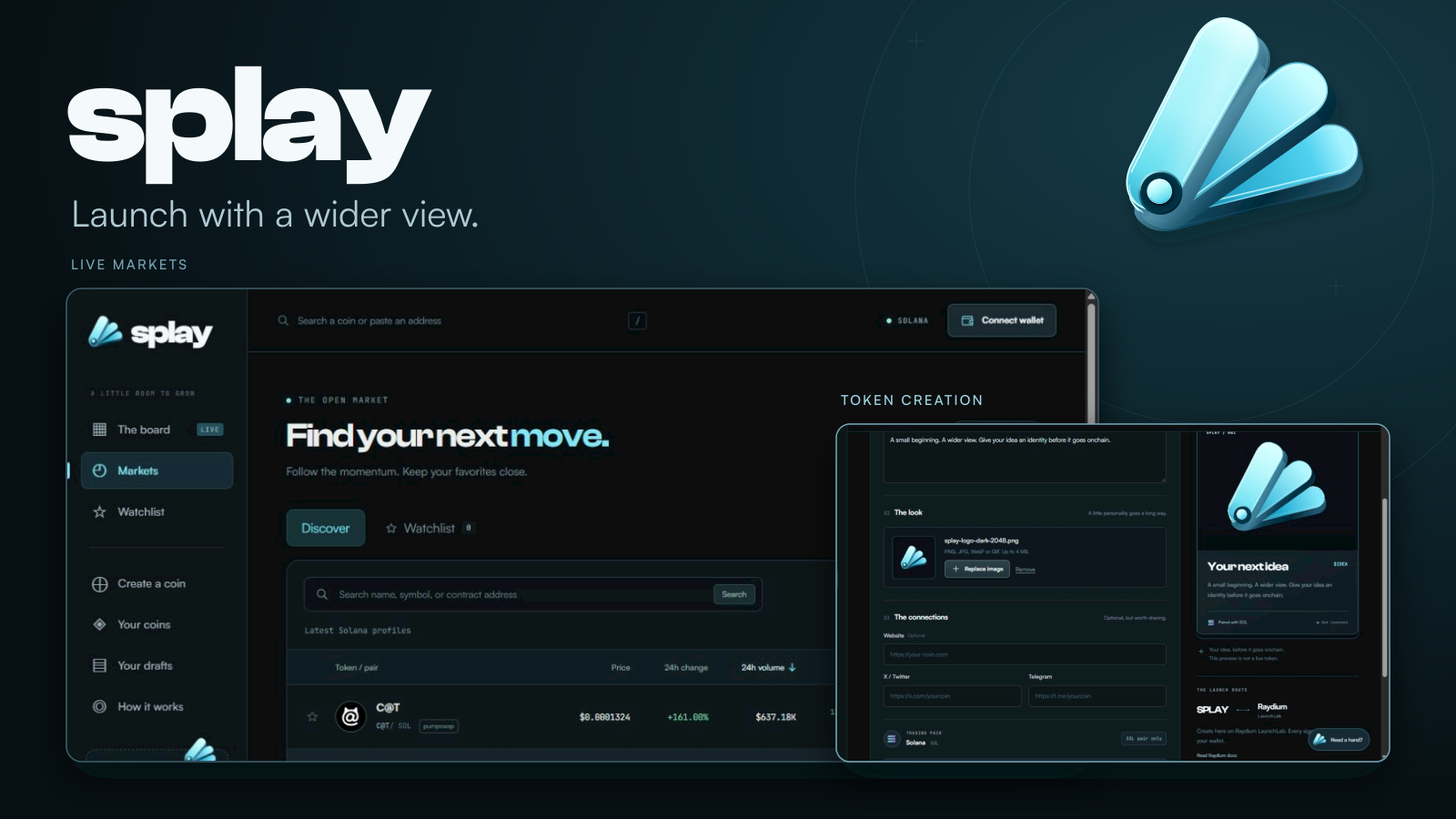
An idea can begin with a name, an image or a conversation. Turning it into a token involves more decisions: how it should look, where its metadata lives, what a launch costs and what happens after a transaction is submitted. Splay brings those steps into a single Solana workspace, alongside live market discovery. Its cyan, three-blade fan expresses the same idea as the product: open a little space to see what comes next.
Start with the identity
The creation workspace begins with a token's name, ticker, description, image and links. A live preview keeps that identity visible while the details take shape. Drafts are stored in the current browser, so a creator can leave an unfinished idea and return to it on the same device. Images and metadata can also be exported. Saving a draft is a planning step; it does not create a token on-chain.
Before launching, the identity needs a public home. Splay supports image and JSON publishing through Irys, with a storage quote before any required funding. Funding and upload signatures are separate actions for the wallet owner to review. Creators who already have hosted metadata can provide its URL instead. The launch flow checks that the document matches the token's name and symbol and points to an image.
Make the approval a deliberate step
Splay prepares launches using Raydium LaunchLab's current SOL configuration. It reads the protocol settings, builds a creation transaction and runs an unsigned simulation before presenting a review. Network fees, rent and other account funding appear as separate amounts. The current flow includes no initial token purchase and adds no Splay fee; protocol, network and storage costs can still apply.
Connecting a wallet does not approve a launch. The final signing request is a separate action, and the reviewed transaction is checked again before submission. Splay does not ask for a seed phrase or private key. The wallet owner remains responsible for checking the transaction and deciding whether to approve it.
Keep the market in view
The market board complements creation with live DEX Screener data, contract search, sorting, pair details and charts. A browser-local watchlist keeps selected tokens close at hand. These are third-party market listings, not claims that those projects were launched through Splay or endorsed by it. Prices and other figures can change quickly, and market providers may be delayed or unavailable.
After submission, the token address and transaction receipt join the local launch history. A manual confirmation check reads Solana without sending another transaction. Pending receipts stay pending until a successful confirmation is observed; failed receipts remain visible too. This matters when a network response is slow: a submitted transaction is not the same as a confirmed launch, and its receipt should be checked before trying again.
Splay is an independent interface that integrates external infrastructure, including Raydium LaunchLab, Irys and DEX Screener. It is not affiliated with or endorsed by those services. Its purpose is practical: bring identity, preparation, approval and market context into a clear workspace. The next move still belongs to the person holding the wallet.